Abstract:
This paper talks about
the Chinese Pontianak’s reason to do migration and how the migration happens.
In another part in this paper, there is case study of nepotism practical in
economic activity that they do to their kinship. Also this paper tells how the
cultural schema theory applies to the Chinese Pontianak standing point and how
the economic behavior of Chinese Pontianak changes time-by-time. At the end,
the paper will show the effect of economic behavior shortly.
“Welcome to Kota”
One night, I’m looking for
dinner in somewhere in West Jakarta, It so crowned and super noisy area. I need
to be super patient to go there because of the traffic is so bad and the
situation becomes worse because there is no parking lot, so people park their
car on the street. I can’t hold my madness when I go straight to this area. But
I really need my dinner now and here because I already wanted this kind of food
since last month and I can’t find another restaurants that can serve kwetiau
siram as best as Kwetiau Akhank in Gajahmada.
Then I arrive in front of
a ruko, which is kwetiau akhank that I look for. I order my dinner and waiting
for a while. Then I pay attention to the cashier which is the owner, she really
fast in calculate the bill and talking. I meant talking in bahasa but with
Chinese intonation with full speed of speaking, it kind of funny, right? But
that’s how she communicates because people who have same way of communication
surround her. Then I look around me, mostly are Chinese people who talking with
their own language; hakka, khek, tio chiu, and whatever. I felt like I’m in
China not in Jakarta.
Then I heard some people
who seat next to me and talk in khek language which same as my father language.
Then I try to begin a conversation
“Dari mana ci?”
“ Pontianak, kenapa? She
answered
“ Bahasanya sama ci sama
papa saya hehe”
“ Oh iya? Dari Pontianak
juga? She asked
“ Bukan, dari Belitung” I
mentioned
“ Hampir hampir mirip kok
bahasanya”
“ Oh gitu hehehe, makan
dulu ci ” I end the conversation because my meal already set in table.
When I’m eating, I’m
thinking how come this area full lived by Chinese people. I try to make
assumption; probably they are the settled foreigners from some region. I know
some people are from Medan and Pontianak, but I can’t proof it because I just
hear from their language not ask them directly or see the symbol around them. Before
I ask them to prove my assumption, I have to admit these Chinese people are not
friendly as we though, even they are quite ignored when meet new people because
they only want to talk to people who they know. That’s what I have experienced
it. So when I want to pay, I make my self to be brave to ask, where she come
from? And lucky me she answered it friendly. She came from pontianak! Exactly same
as what I’m guessing because there is lucky cat statue up her desk.
At that time, unintentionally
I’m stereotyping this place are the place of Chinese Medan and Pontianak. Why I
just stereotype Medan and Pontianak? Not Bangka Belitung, Medan or where else.
Because it reflex comes to my mind and I see the tendency of Pontianak are
dominant here. Then I think these people create a society in Kota as same as
they used to in their hometown. In order to make them feel homey; so they can
adapt with Jakarta environment. Where they sell food from Pontianak, they work together
and also they live group-by-group in order to make them feel like they are in
Pontianak, not in Jakarta. One thing that interesting is about the their
economy activity. Mostly they are not from Jakarta but they migrate to Jakarta
for economy reason; they look for a business opportunity.
Migration
for Economic Reason
Talking
bout the Chinese Pontianak (Hokkian, Hakka, Kanton, Tiochiu, Hainan) who do
migration to Jakarta for economy reason. I think, there is a background that
relate to the past that motivates them to migrate. If we take a look to the
history of the deployment of Chinese across the world, we will get the big
picture of why do Chinese people migrate and how the migration happen.

The civil war
in China in early 20th century, intertribal war between Chinese ethnic group in
north and south, desire to have better life actually causes the deployment of
Chinese people in this world. Because of this, people are going out then look
for the new place where they can live for long time. And between 1911-1949, these migrations are considered to be
among the largest in China's history. The waves of migration spread to across
the world; include Indonesia. There is no exact year, when Chinese people come
to Indonesia. But Purcell (1997) in His book, The Chinese in South
East Asia. He said, there are 3
phases of Chinese Migration to Indonesia: The first phases, when Nusantara were
lead by King. Chinese people follow the wind season to sail and after they arrive,
they live in port for a while. Some resources mentioned, this phase existed in
Airlangga period. This phase well known as “The Arrival of Chinese people
for Trade”(Purcell, 1997:33 in Depdiknas, 2000:6-7). The second
phases were European Nations came to South East Asia in 16th
century. The arrival of Portuguese, British, Dutch, and Spanish made this
region crowded and these people make port as the center of economy. That’s why Chinese
people do migration; because they want participate in economy activity that
held by European people, so they can live in Nusantara longer. The last phases
is when Dutch East Indies government are existing in Indonesia. Many proof show
lot of Chinese habitation in West Kalimantan, east Sumatera and north coast
Java. Mostly they came for trade but also work as the labor in mining and
planation project.
Another resources also
mention the almost same things, in early 5th century; Chinese trader
already came to Indonesia for the economy reason. They look for herbs and
spices, and then sell it. Because of this reason, These Chinese people stay for
a while and assimilate with local people. Not all of Chinese traders go back to
China, because some of them married with the local and they have a clan here.
If I see each
phases, every wave of Chinese migration happen because the economic reason.
They want to survive outside their hometown, so the only way that they can do
is trade. Even thought some Chinese also do another job but mostly they are
trader. In my perspective, migration for the economy reason is not usual thing.
I think it can be interpret as a culture. If we go further the mean of Culture,
Culture comes from Latin word, which is Colere that have meaning: do or carry
out. So, I can say these people culturing (do) a migration for economy reason
and they keep forwarding to their next generation until they have better life
than before.
Why I say, it
can be a culture, because these Chinese people apply the Chinese basic
fundamental or believe to the economy activity, for example they put maneki
neko (lucky cat statue) in their shop, in order their business is going to work
well or put the small pool with gold fish in front of their office or building.
Thus, Chinese people economic activity influenced by cultural, believe, and
also history.
What happen in
Inter-nations migration, also happen in Inter-cities migration where people do
for economic reason, such as Chinese Pontianak who come long away to Jakarta. The
pattern of Chinese migration in Jakarta is different with the past. If the past
we know, the migration between inter-nations happens because of the war but
here in Indonesia, I think it because advancement of a region that attracts
people from outside come and want to be a part of this advancement. In colonial
era, Jakarta is really famous; big city, big dream. The capital city and business
center where all have the trader or business people make deal of money there.
Here’s the cause of people in Pontianak come from to Jakarta. Then the
migration begins with one by one group of people, and then they make a clan
based on where they come from. Some area in Jakarta like: Jelambar, Pluit,
Muara Karang, Mangga besar, Gunung sahari, Gajahmada, etc. well known as the
basecamp of Chinese medan and Pontianak.
After they
live and have a job here, they try to invite their family from Pontianak and it
keep going till now. They are belonging to this circle where one person come
then invite another person to come, that’s why every year Jakarta get lot of
migrant from Pontianak. Generally they work as trader in Kota and around
(Gajahmada, mangga dua, gunung sahari, mangga besar, etc.) They sell
everything; food, electronic things, clothes, machine, and traditional
medicine. But there are also some Chinese people who success becomes
businessman or entrepreneur in hospitality sector: hotel and spa.
Nepotism in Economic Activity
Hiu Family
comes from Pontianak and migrates to Jakarta in early 1940s for the economic
reason. They look for a business opportunity to have better life. Before, they
used to worker in then shortly they become the trader in Mangga Dua. Because
the business improves, thus they need more workers to help them. One of Hiu
family member that I interviewed: Hiu Fung Fung said they need workers who
understand their work ethos and culture that they apply in business. Another
reason is because they don’t really believe people here because they are
migrant. That’s why she invites some people who still have kinship with Liu
Family to come and work here. Hiu family admit if they still ask some family to
work with them till now. Even though there are some workers who already work
for them 2/3 years. They are more comfortable with their family than hire other
people who they do not know exactly.

Unintentionally,
Hiu and Lian Family do nepotism for economic activity. They ask some family
there then ask them to work. Basically, Nepotism is favoritism granted in
politic or business to relatives without considers the professionalism and
ability. This kind of action is not fair but for them (Hiu & Lian Family)
this the best way to help their family in economic aspect and give the family
chance to have better life.
Based on Adam
Bellow perspective in his book: in praise of Nepotism book. He mentions if
nepotism is
part of human nature that most of us would do favors to our relatives.
Therefore
the complete elimination of nepotism would result in a world without humanness. George
Orwell once wrote, "To an ordinary human being, love means nothing if it
does not mean loving some people more than others." This logic is at the
heart of Bellow's conception of nepotism, which he means to rescue from the
near-universal scorn it suffers today. Bellow surveys the natural history of
nepotism from its evolutionary origins to its practice in primitive tribes,
clans, and kingdoms to its role in the great societies of the world. These
include the ancient Chinese, the Greeks, the Romans, Europe in the Middle Ages
and the Renaissance, and the democratic and capitalistic societies of the past
two centuries, with extended consideration of the American experience.
Actually
nepotism has two sides; negative and positive but often connote as the
negative. Wayne Rivers as the president of family business institute said Nepotism does not have to
be negative. Some closely held businesses actually promote nepotism to the
point that they encourage the practice among employees. Perhaps the best
indication of employee pride and loyalty can be found when employees recommend
that other family members join the company.
Compare to
Hiu and Lian Family, actually they only want to help their family to have
better life and running the business together. It’s normal, if they have sense
of humanity to help other. That’s why Bellow believed there is good nepotism
and bad nepotism. But in the real life, bad nepotism is more appear than the
good one.
Cultural Schema Theory in Pontianak Society
This
Chinese people live together in particular area, so they can regularly interact
with others. The reason why they live together because they don’t want their
community spread out and at the end their lost communication. And also they
want to keep the kinship, because through hold tight between each other will
make the kinship relation becomes stronger.

Hiu
Family always meets their family everyday, because they live in the same area
and even the same block. They also trade in the same building in mangga dua.
The frequency of their meeting, it can affect to their society fundamental.
Where they will prefer their community than ignore the other. That’s what I see
to some people who have strong relation between their community (Pontianak
people). They comfortable with their family and friend, that’s why some people
are not open to new people. Because of this kind of society, it will affect to
have same opinion. Each Pontianak people will affect to each other and only
listen one resource. They even more believe to the direct communication with
Pontianak people.
According
to the book of theorizing about intercultural communication, there is a
Cultural scheme theory that explain about proposes when we interact with
members of the same culture in certain situations many times, or talk about
certain information with them many times, cultural schemas are created and
stored in our brain (Nishida, 1999).
Because
of they often meet and exchange their opinion, at the end they will have the
same way of thinking and recorded in their brain.
When
I interview Hiu Fung Fung, I try making an intermezzo through ask bout the two
president candidates that running now. I just ask the opinion bout both of
candidates, she chooses Jokowi. It doesn’t matter who she choose but what make
me a bit surprise is she don’t read news or watch. She only hears from family
and friend, and most of them are Jokowi supporter. So, if I asuume, Hiu Fung
Fung doesn’t decide based on the criteria or qualification and stuffs but she
believe what society. tells her. And this recorded to her brain, so she also
promotes Jokowi to the family and friend.
The
author of A
cognitive approach to intercultural communication based on schema theory,
Nishida mentions there are 16 Core Attributes in a Cultural Schema that can
affect to the someone understanding; Taboos,
Religion,
Dress,
Economic
resources, Power, Projection of power Social structure, Family
, Cultural
artifacts
, Government
, Technology
, Education
,Values/Beliefs/Ethics/Morality
Customs/Traditions
, Business etiquette,
Leadership
Politic (Nishida, H: 1999).
In
Hiu Fung Fung’s case, we can see how these things happen to her choice and her
mindset. Let say, if we see from government aspect, probably she prefer a
leader who do not authoritarian because of her experience in 1998, lot of
Chinese Pontianak became the victim. Social structure also can influence her
opinion; she looks who has the biggest support from chinese people? Jokowi or
Prabowo? Because of this social structure, she determines whom will she choose.
Back
to the cultural schema, all of this can relate because of her society where
surrounded by Pontianak people, even thought she doesn’t communicate directly
but she already had a record that influence by her experience as Pontianak in
1998 tragedy or her social structure where more support to Jokowi.
Economic Behavior
The
principles of economic behavior of ethnic Chinese in Indonesia is changing from
time to time, but in general the principle of ethnic Chinese economic behavior
depending on their understanding of the policy and the situation of the
national political conditions of the existence of ethnic Chinese national.
Economic
behavior of ethnic Chinese in Indonesia is influenced by their perception of
the situation and political conditions, social security and the public. As
noted by Robbins (1991:125); that the perception of an individual or group of
people is a process where an individual or a group organizing and interpreting
their sensory impressions to give a mark for their environment.
This is
supported also by the perception of ethnic Chinese against Chinese ethnic
self-identification of the country inhabited. Particularly in Indonesia,
Chinese economic perceptions are divided between economic and political
perceptions of ethnic Chinese "full-blooded" and Peranakan both
present as ethnic Chinese overseas. Ethnic Chinese "full-blooded"
especially the condition is under economic status, tend to behave in a dynamic
economic and trade-oriented. Such behavior is motivated by the hope to live a
safe, prosperous and loyal to the customs, as well as adherence to the family,
including the cooperation relations among ethnic Chinese ethnicity. Meanwhile
Peranakan Chinese people tend to be more conservative in business. Ethnic
Chinese rely on the integrity of a relationship between ethnic Chinese in
economics and kinship. Sahlins considers what it is
that makes capitalist societies different from so-called “primitive”
societies—in the end he rejects any substantial distinction: capitalist
societies are just as symbolically constituted (i.e., totemic) as primitive
societies. It is just that our totems are intrinsically connected to bourgeois
modes of production rather than kinship systems.
The
effect of economic behavior is economy gap between Chinese people and local
people. After they do economic activity and stay here, these
Chinese people have their income. They work hard to get better life and they
deserve what they do. Year by year Chinese people become richer prosperous,
this makes the local people have social jealousy to them. And this social
jealousy already existed since colonial era, where the government of Dutch East
Indies makes a social clarification based the ethnic.
The
Government gives lot of exclusive treat such as; the Chinese people get their
place to business and live in around perkotaan, also they do long distance trade. This chinese also get the priority when they buy a
land then rent it to the people. Chinese people at that time have important
role as mediator worker between the local and the Dutch people. Not only that
but also, Chinese people work as tax contractor, opium distributor, mortgage.
That’s why Santono Kartidirjo dubbed as “China Mindring” (Arifin, M.T. 2005 : 220).
Skinner
(Mackie, 1991:306) says that the strength of the tendency of assimilation
dependent on local circumstances and socio-cultural factors, not the quality
that is in ethnic Chinese. This is confirmed by Mackie that: "as a result
of Dutch colonialism did Dutch citizen class divisions, ethnic Chinese take
over indigenous peoples, resulting in the slow identification of ethnic Chinese
to Indonesia in the early post-colonial Dutch" (1991:306).
Although
then the full identification as an Indonesian ethnic Chinese suffered
discrimination barriers of political, economic and social, socio-cultural
assimilation but the solution is not the answer to the key of this problem. Because
of this, lot of local people do a movement Anti Chinese and they want to
slaughter the Chinese like tragedy in 1740 and 1998. I think, this is the
effect of economic activity that Chinese people do.
References:
Arifin, M.T. dkk. 2005. Kajian Sejarah Mikro Sebagai Muatan Lokal.
Surakarta: Sebelas Maret University Press
Bellow, Adam. (2003). In
praise of Nepotism ; New York. Knopf Doubleday
Mackie, J.A.C. (1991). Peran ekonomi dan identitas
etnis Cina Indonesia dan Muangthai in Wang Gung Wu dan Jennifer Cushman
book, Perubahan Identitas Orang Cina di Asia Tenggara. Jakarta: Pustaka Utama
Grafika.
Nishida,
H. (1999). Cultural Schema Theory: In W.B. Gudykunst (Ed.), Theorizing About
Intercultural Communication, (pp. 401–418). Thousand Oaks, CA: Sage
Publications, Inc.
Nishida, H. (1999). A cognitive
approach to intercultural communication based on schema theory. International
Journal of Intercultural Relations, 23, 753-777.
Purcell, Victor. (1997). The Chinese in
Southeast Asia: Oxford
University Press
Robbins, S. P. (1991). Organizational Behavior. New
Jersey:Prentice-Hall.
Sahlins,
Marshal. (1978). Culture and Practical
Reason. The University Of Chicago Press.
.

 Take the Coca-Cola Company as the CSR example, in 2012; they
started a program called 5by20 in
economic aspect to empower young women entrepreneurs. The program aims to bring
five million women to have business skill, which can be use to prosperous the
family and community. At the end, the company hopes they can develop world into
business by 2020 as local bottlers and distributor of Coca-Cola.
Take the Coca-Cola Company as the CSR example, in 2012; they
started a program called 5by20 in
economic aspect to empower young women entrepreneurs. The program aims to bring
five million women to have business skill, which can be use to prosperous the
family and community. At the end, the company hopes they can develop world into
business by 2020 as local bottlers and distributor of Coca-Cola. 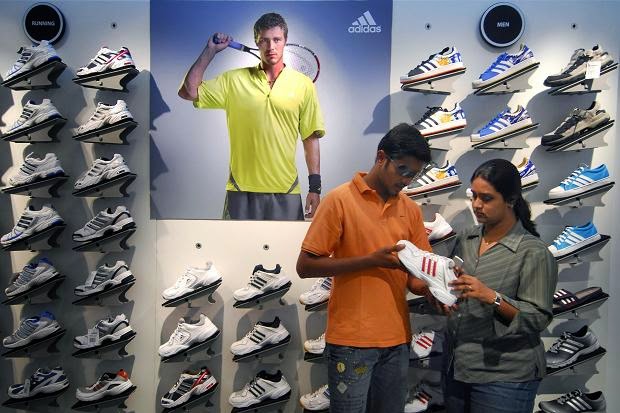 Adidas group will be good example
of CSV. Adidas did partnered with Nobel Laureate Muhammad
Yunus’s micro-finance organization, Grameen Bank to produce the low cost shoe
for Bangladeshian. The purpose of doing this is to provide affordable shoe in
order to protect poor people from diseases. [1] They
create and share value which profitable to adidas (financially) and good
reputation for Grameen Bank.
Adidas group will be good example
of CSV. Adidas did partnered with Nobel Laureate Muhammad
Yunus’s micro-finance organization, Grameen Bank to produce the low cost shoe
for Bangladeshian. The purpose of doing this is to provide affordable shoe in
order to protect poor people from diseases. [1] They
create and share value which profitable to adidas (financially) and good
reputation for Grameen Bank.